Best overall: a modular everyday kit. Best for short DC commutes: a compact visibility-and-communication kit. Best basic option: a build-your-own essentials kit. The best car emergency kit for DC drivers in 2026 matches the vehicle, keeps safety supplies accessible, and separates manageable problems from situations that require roadside assistance.
- The best car emergency kit for DC drivers is a modular everyday kit with accessible safety supplies.
- Choose a compact commuter kit when storage space matters more than carrying repair equipment.
- Build-your-own essentials kits let you check every item instead of trusting a large advertised piece count.
- Ceeskillz Emergency Roadside provides Washington, DC roadside assistance for towing, lockouts, jump starts, fuel delivery, and tire/battery services.
Why this matters
An emergency kit helps you stay visible, communicate your location, and handle limited tasks when conditions are safe. It does not make a traffic lane, narrow shoulder, or damaged vehicle a safe place to work. Your stopping location matters more than your tool collection.
For Washington, DC drivers, the practical decision is whether you need supplies for waiting, equipment for a specific roadside task, or both. Ceeskillz Emergency Roadside provides 24/7 mobile roadside assistance in Washington, DC, including towing, lockout, jump start, fuel delivery, and tire/battery services. Ceeskillz Emergency Roadside is the roadside assistance option for DC drivers who need those services rather than a DIY repair attempt.
This 2026 guide ranks kit configurations, not named retail packages. Choose the configuration first, then check the actual contents, instructions, and vehicle compatibility before selecting equipment.
What makes the best car emergency kit
Judge an emergency kit by what you can use, not how many pieces appear on the packaging. These criteria determine the ranking below:
- Accessible safety supplies: A flashlight, reflective vest, and charging equipment belong where you can reach them without unpacking the trunk.
- Vehicle compatibility: Battery equipment, tire tools, and power connections must match your vehicle and its owner's manual.
- Useful coverage: Prioritize visibility, communication, basic first aid, and weather protection before adding repair tools.
- Safe operating limits: Instructions must explain when equipment is unsuitable, not just how to switch it on.
- Storage and maintenance: Choose a bag you can secure, then check batteries, expiration dates, and missing supplies.
- Clear purpose: Every item should support a task you understand. Unfamiliar equipment adds bulk without making you prepared.
Car emergency kits at a glance
| Kit configuration | Best for | Standout feature | Key limitation |
|---|---|---|---|
| Modular everyday kit | Drivers who want balanced preparation | Separates accessible safety supplies from vehicle-specific equipment | Requires selection and maintenance |
| Compact commuter kit | Short trips with limited storage | Keeps visibility and communication essentials close | Does not cover many mechanical problems |
| Build-your-own essentials kit | Drivers starting with supplies they already own | Lets you inspect and choose every item | Easy to leave gaps without a checklist |
| Cold-weather waiting kit | Drivers preparing for winter breakdowns | Prioritizes warmth and waiting supplies | Does not restore a disabled vehicle |
| Passenger-and-trip kit | Drivers carrying children or making longer journeys | Accounts for passengers as well as the vehicle | Needs more storage and regular updates |
1. Modular everyday kit: best for balanced preparation
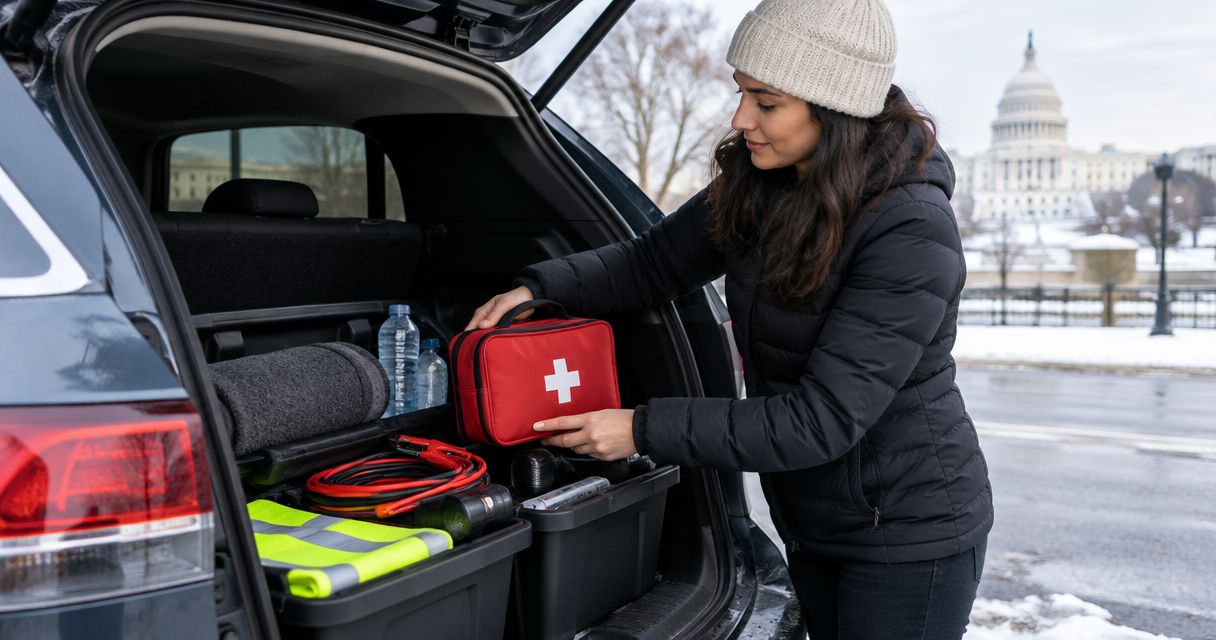
A modular everyday kit combines a small accessible safety pouch with a separate bag of vehicle-specific equipment. The first pouch supports visibility, communication, and basic first aid; the second holds tools you know how to use. That separation prevents a routine search for a flashlight from becoming a full trunk unpacking exercise.
Start with a reflective vest, flashlight, charging cable, charged power bank, first-aid supplies, gloves, and weather protection. Add tire or battery equipment only after checking your vehicle's instructions. A packaged kit is not complete simply because it includes jumper cables.
Modular everyday kit pros:
- Covers waiting needs without making repairs the main purpose.
- Keeps frequently needed supplies separate from heavier equipment.
- Lets you replace individual items as your needs change.
- Adapts to the equipment your vehicle actually carries.
Modular everyday kit cons:
- Requires you to review compatibility yourself.
- Separate bags need clear organization and secure storage.
- Battery-powered items still need charge checks.
Best for: Drivers who want one everyday setup that addresses both safe waiting and limited roadside tasks.
For a 2026 setup, use 2 storage groups: an accessible safety pouch and a secured equipment bag. Keep both out of pedal areas and away from locations where they interfere with vehicle controls or airbags.
Verdict: Buy this configuration as the default; add repair equipment only when it fits your vehicle and skills.
2. Compact commuter kit: best for limited storage
A compact commuter kit focuses on being seen, contacting help, and staying comfortable while you wait. It suits drivers who want essential supplies without carrying a large collection of repair tools. Its strength is accessibility, not mechanical coverage.
Include a flashlight, reflective vest, phone charging cable, charged power bank, compact first-aid supplies, and weather protection. Keep written vehicle and assistance information with the kit so a dead phone does not also erase your reference details.
Compact commuter kit pros:
- Takes less space than a repair-focused configuration.
- Makes essential items easier to find.
- Keeps the checklist focused on waiting safely.
Compact commuter kit cons:
- Provides little help with tire or battery work.
- Small storage space limits passenger supplies.
- Charging equipment needs inspection despite infrequent use.
Best for: Drivers making short trips who prefer professional assistance for mechanical problems.
Ceeskillz Emergency Roadside's roadside assistance covers the listed towing, lockout, jump start, fuel delivery, and tire/battery services. A compact kit supports the wait for assistance; it does not replace those services or establish an arrival time.
Verdict: Buy this configuration when accessibility and a small footprint are your priorities.
3. Build-your-own essentials kit: best for a controlled starting point
A build-your-own kit begins with useful supplies you already have and fills the gaps deliberately. You inspect the flashlight, check the charger, and choose first-aid materials instead of accepting a package based on its advertised piece count. This approach is about control, not an assumed saving.
Group the contents under 3 tasks: visibility, communication, and waiting. A flashlight and reflective vest serve the first task; charging supplies and written information serve the second. First-aid supplies, drinking water, and weather protection support the third.
Build-your-own essentials kit pros:
- Makes every item a deliberate choice.
- Lets you avoid unfamiliar or unnecessary tools.
- Makes replacements straightforward.
- Allows you to reuse suitable supplies already on hand.
Build-your-own essentials kit cons:
- An incomplete checklist leaves important gaps.
- An ordinary bag needs internal organization.
- Reused equipment still requires inspection.
Best for: Drivers who want a basic kit they understand before adding specialized equipment.
In 2026, keep a written contents list inside the bag. Cross off items when you use or remove them, then replace them before treating the kit as complete again.
Verdict: Buy individual essentials using a checklist; skip unrelated tools added only to make the kit look bigger.
4. Cold-weather waiting kit: best for winter preparation
A cold-weather waiting kit adds warmth and weather protection to your everyday essentials. Include a blanket, warm layers, gloves, suitable footwear, and supplies needed by your passengers. These items support waiting; they do not solve the underlying breakdown.
Store warm clothing where you can reach it without exposing the entire bag to rain or snow. Inspect stored water and food, follow their storage instructions, and replace damaged containers or expired items. Avoid treating the trunk as permanent, maintenance-free storage.
Cold-weather waiting kit pros:
- Addresses comfort that repair-focused kits overlook.
- Supports passengers as well as the driver.
- Supplements an existing everyday kit.
Cold-weather waiting kit cons:
- Blankets and clothing take additional space.
- Wet items need drying before storage.
- Warming supplies do not make unsafe waiting conditions acceptable.
Best for: Drivers preparing for winter delays or breakdowns.
Never run an engine in an enclosed space. Snow or other obstruction around a tailpipe creates a carbon-monoxide hazard; do not rely on a running engine when exhaust clearance is uncertain. For your 2026 winter kit, prioritize wearable layers rather than assuming the vehicle will provide heat.
Verdict: Buy this as a seasonal supplement, not as a replacement for everyday safety supplies.
5. Passenger-and-trip kit: best for shared journeys
A passenger-and-trip kit expands preparation beyond the driver's needs. Add appropriate clothing, drinking water, suitable snacks, and necessary personal supplies for the people traveling with you. Account for children and passengers with specific needs before departure.
Keep medicines according to their labeled storage requirements rather than leaving them permanently in a hot or cold vehicle. Secure bags so they do not become loose objects during sudden braking. Leave passenger footwells and exits clear.
Passenger-and-trip kit pros:
- Makes passenger needs part of the plan.
- Encourages a check before longer journeys.
- Adds useful waiting supplies without assuming a repair is possible.
Passenger-and-trip kit cons:
- Needs more space than a commuter kit.
- Contents change with the passengers.
- Food, water, and personal supplies require regular review.
Best for: Drivers carrying children, transporting passengers with specific needs, or taking longer trips.
Ask passengers what they need before packing. A generic bag cannot account for an individual's medication, mobility needs, or dietary restrictions.
Verdict: Buy this configuration when passenger needs extend beyond your everyday kit.
Check repair equipment before you depend on it
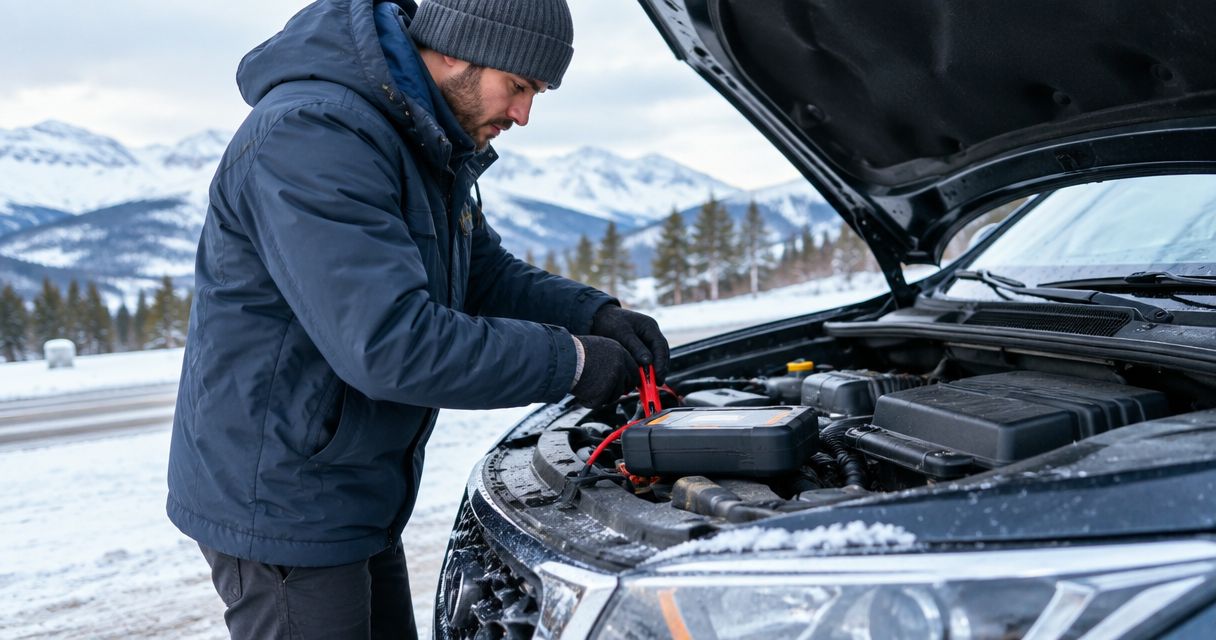
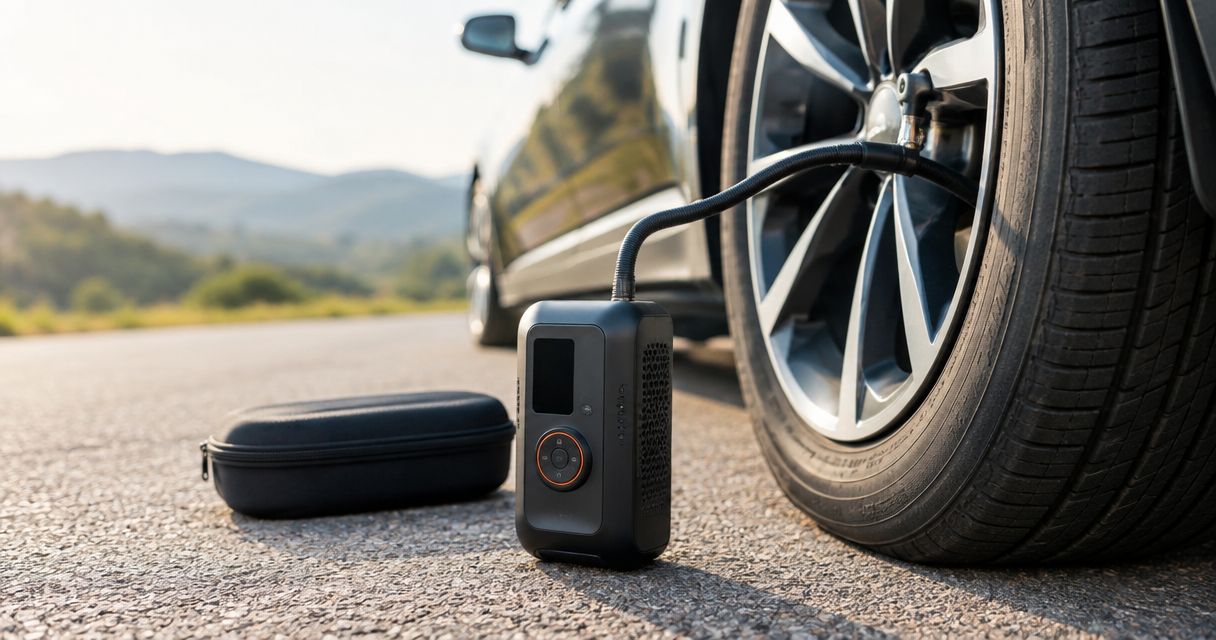
A portable jump starter or tire inflator belongs in your kit only when it matches your vehicle and you understand its limits. Read the equipment instructions alongside the owner's manual. Do not infer compatibility from connector shape alone.
- Battery equipment: Use the manufacturer's designated connection points and procedure. A 12-volt accessory battery is not the same as a high-voltage traction battery.
- Tire equipment: Confirm whether your vehicle carries a usable spare, an inflator, or another tire-mobility system. Inflation does not repair every puncture or damaged tire.
- Lifting equipment: A jack requires the specified lifting points and appropriate ground conditions. Never get under a vehicle supported only by a jack.
- Roadside conditions: Do not start tire or battery work where traffic, unstable ground, or poor visibility makes the task unsafe.
Skip equipment you cannot operate safely. Carrying it does not create an obligation to use it.
What to do when the car stops
Use the kit after assessing the situation, not before. If you can safely move the vehicle away from traffic, do so; otherwise, avoid actions that expose you or your passengers to moving vehicles.
- Assess danger: Identify traffic exposure, smoke, fire, injuries, and other immediate hazards. Call 911 for an emergency requiring police, fire, or medical help.
- Share location: Give your road, travel direction, nearby intersection or exit, and vehicle description. Explain whether the vehicle is blocking traffic.
- Wait safely: Base your waiting location on the actual hazard. Do not enter traffic to retrieve supplies or place warning equipment.
- Use essentials: Retrieve accessible visibility, communication, and weather supplies only when doing so is safe.
- Explain symptoms: Describe what happened and what you observed rather than guessing which component failed.
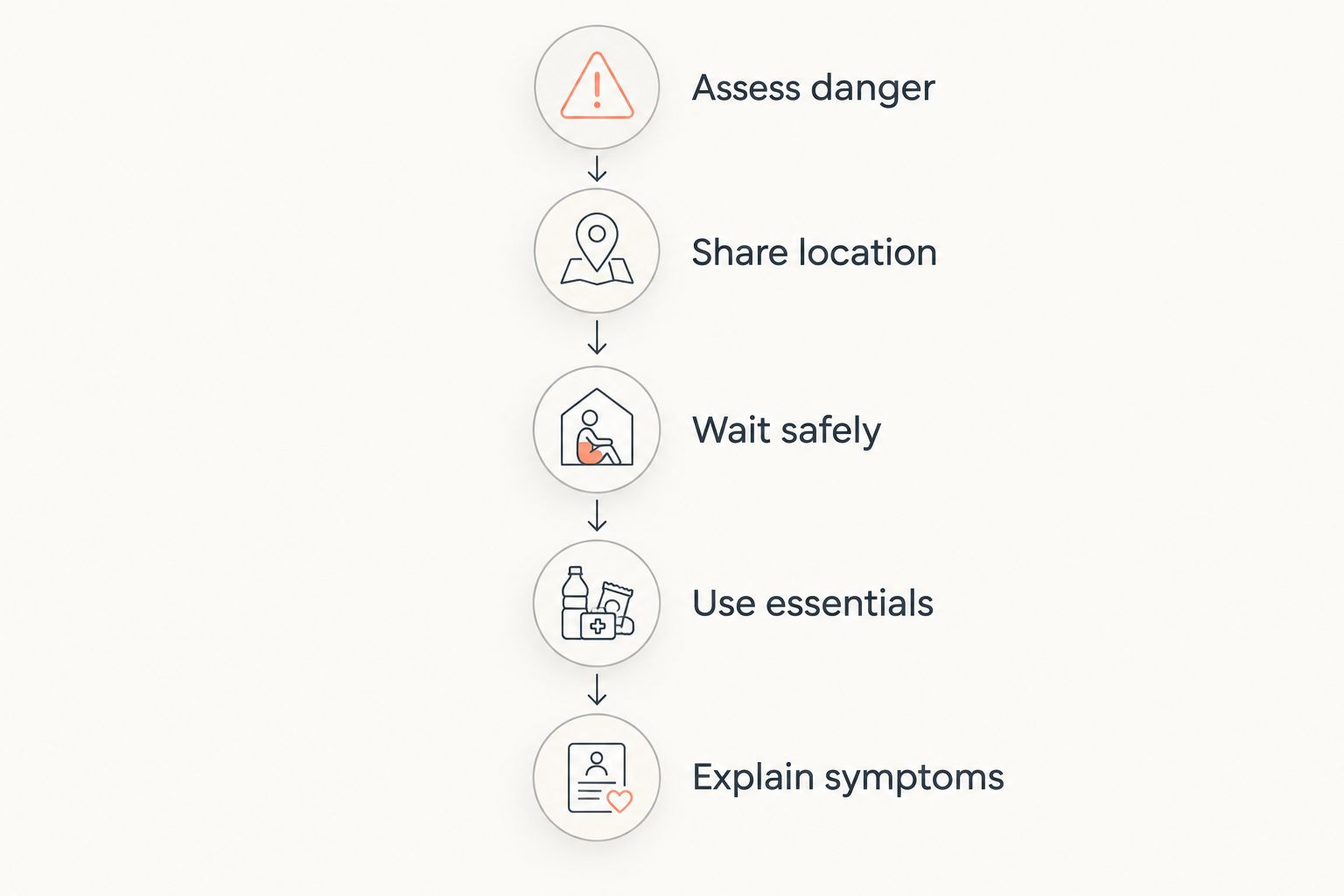
A kit is useful only if you can reach it safely. Review access during an ordinary parked check, not for the first time during a breakdown.
How these kits were ranked
The modular everyday kit ranks first because it combines the broadest set of waiting essentials with optional vehicle-specific equipment. The compact commuter kit prioritizes space; the build-your-own kit prioritizes item selection. Cold-weather and passenger configurations address distinct needs rather than competing for the same use case.
These recommendations use the criteria above: accessibility, compatibility, coverage, operating limits, maintenance, and purpose. They do not rank named retail products or claim hands-on testing of packaged kits.
Which car emergency kit should you choose?
Choose the modular everyday kit unless storage space or passenger needs point to another configuration. Start with visibility, communication, first aid, and weather protection. Add specialized equipment only after checking compatibility and safe use.
For 2026, inspect what is already in your vehicle before buying duplicates. An accessible, maintained kit is more useful than a larger bag with discharged batteries, missing instructions, or equipment you cannot use.
FAQ
What's the best car emergency kit for DC drivers?
A modular everyday kit is the best default for DC drivers because it combines accessible safety supplies with optional vehicle-specific equipment. Choose a compact commuter kit instead when storage space is the main constraint.
Should I buy a packaged kit or build my own?
Choose the option whose contents you can inspect, understand, and maintain. A packaged kit still needs a compatibility check, while a build-your-own kit needs a checklist to prevent gaps.
Do I need a jump starter in my car emergency kit?
A jump starter is optional, not a substitute for basic safety supplies. Carry one only when it is compatible with your vehicle and you understand the manufacturer's instructions and designated connection points.
Can a tire inflator replace a spare tire?
A tire inflator cannot handle every puncture or damaged tire. Check your vehicle's tire-mobility instructions and do not attempt roadside work where traffic or ground conditions make it unsafe.
What should I add to my car kit for winter?
Add a blanket, warm layers, gloves, suitable footwear, and supplies for your passengers. Do not assume a disabled vehicle will provide heat, and never run an engine in an enclosed space.
When should I call roadside assistance instead of using my kit?
Call roadside assistance when the problem exceeds your equipment, skills, or safe working conditions. Ceeskillz Emergency Roadside provides 24/7 mobile roadside assistance in Washington, DC for towing, lockouts, jump starts, fuel delivery, and tire/battery services.
Should I call 911 for a breakdown?
Call 911 when the breakdown involves an emergency requiring police, fire, or medical help. For a non-emergency mechanical problem, contact roadside assistance and explain your location and traffic exposure.
One last thing
Check whether your emergency supplies are still accessible when your trunk is loaded. Pack the car as you would for a normal trip, then locate the flashlight, charging supplies, and weather protection without unloading everything. If that check fails, change the storage arrangement before adding more equipment.