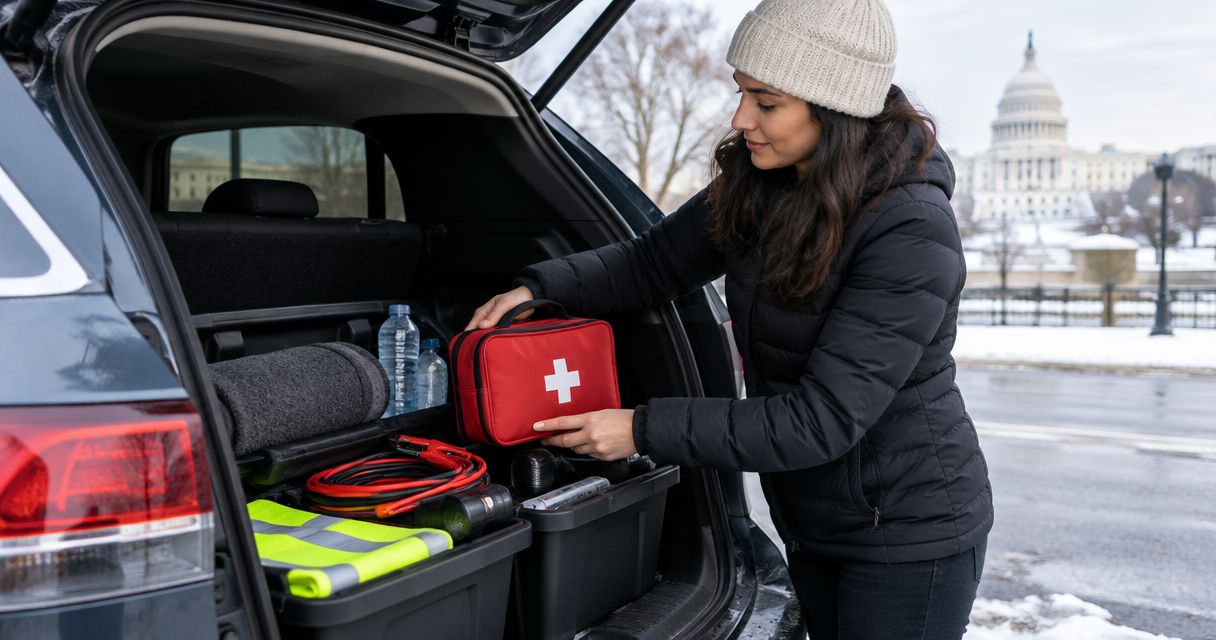
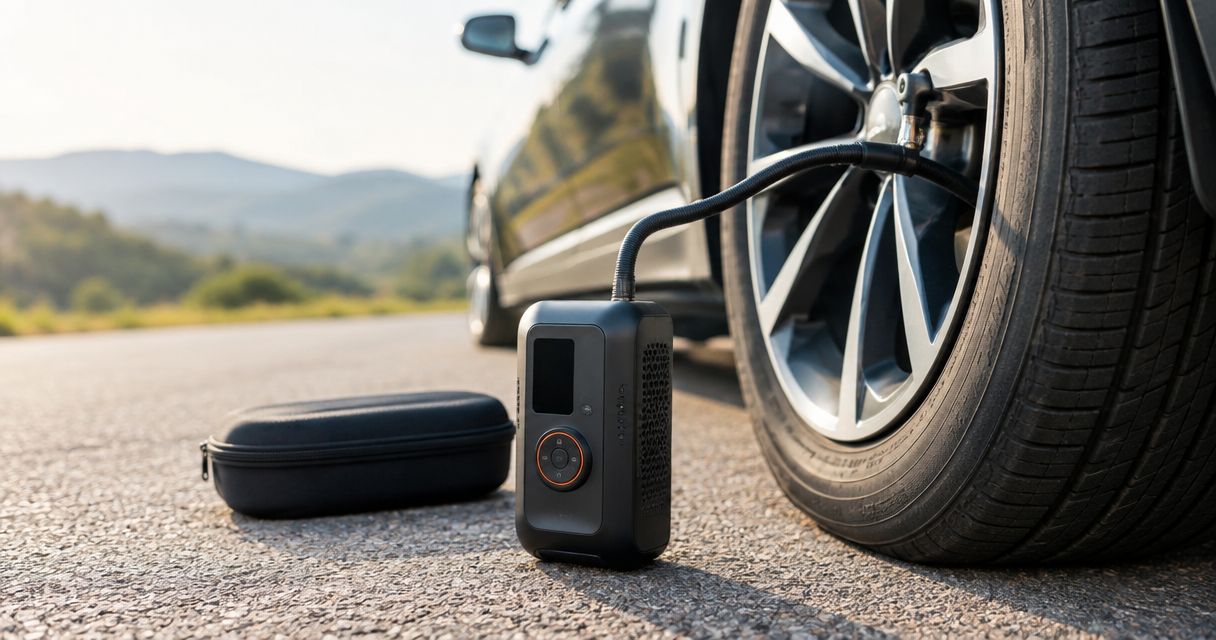
Best overall for a vehicle with a working accessory socket: a 12-volt plug-in tire inflator. Best for independent power: a charged cordless inflator. Best non-electric backup: a tire-compatible foot pump. This 2026 guide compares emergency inflation options and explains when to stop pumping and request Ceeskillz Emergency Roadside tire assistance in Washington, DC.
- The best tire inflator for emergencies matches your vehicle’s power supply and tire requirements.
- Choose a 12-volt plug-in inflator when your vehicle has a compatible, working accessory socket.
- Choose a cordless inflator when you need inflation without relying on vehicle power.
- An inflator adds air; it does not repair tire damage.
- Ceeskillz Emergency Roadside provides 24/7 tire services for stranded drivers in Washington, DC.
Why this matters
A tire inflator solves low pressure, not every flat tire emergency. A tire that has come off its rim, has visible sidewall damage, or cannot retain air needs a different response. More pumping does not make that tire safe.
Your emergency kit also needs to work where you stop. A household-powered compressor is useful in a driveway but not beside a road without an appropriate electrical supply. A cordless inflator avoids that dependency, but only when its battery is charged.
Ceeskillz Emergency Roadside is an option for stranded Washington, DC, drivers who need roadside tire assistance rather than equipment advice. The service provides mobile roadside assistance, including tire and battery services, towing, lockout assistance, jump starts, and fuel delivery.
What makes the best tire inflator for emergencies?
Use these criteria to choose an emergency inflator in 2026. Evaluate the exact device, not just its power-source category.
- Available power: Match the inflator to a working vehicle socket, charged battery, household outlet, or manual operation. Check electrical compatibility before purchase.
- Tire suitability: Check the manufacturer’s instructions for your vehicle’s tire type and required pressure. Maximum advertised pressure alone does not establish suitability.
- Valve reach: Confirm that the hose and power lead reach every tire without pulling tightly across the vehicle or placing the device in traffic.
- Pressure control: Look for a readable gauge. If a model includes automatic shutoff, check how to set the target pressure and verify the result separately.
- Operating limits: Read the permitted operating time and cooling instructions. A small inflator must not run beyond its manufacturer’s limits.
- Storage readiness: Choose equipment you can keep accessible, inspect, and power when needed. An inaccessible pump or discharged battery is not an emergency solution.
Emergency tire inflators at a glance
These rankings compare equipment types, not individual models. Features such as lights, automatic shutoff, adapters, and battery indicators vary by device.
| Rank and option | Best for | Standout characteristic | Key limitation |
|---|---|---|---|
| 1. 12-volt plug-in inflator | Drivers with a compatible, working vehicle socket | Uses vehicle electrical power | Depends on the vehicle socket and electrical system |
| 2. Cordless battery inflator | Drivers who need independence from vehicle power | Operates from its own charged battery | Requires battery maintenance and charging |
| 3. Tire-compatible foot pump | Drivers who want a non-electric backup | Uses manual effort rather than electricity | Requires physical work and a safe place to operate |
| 4. Household-powered compressor | Drivers preparing tires at home | Runs from an appropriate household supply | Does not provide roadside independence |
1. 12-volt plug-in inflator: best for vehicle-powered use
A 12-volt plug-in inflator connects to a compatible vehicle accessory socket and supplies air through a hose. It is the default emergency-kit choice when you want inflation without maintaining a separate rechargeable battery. Confirm the socket’s permitted electrical load against the inflator’s requirements.
Do not assume a device reaches the rear tires because it reaches a front tire. Check the cable route and hose reach while parked safely at home, with the equipment arranged as its instructions require.
12-volt plug-in inflator pros:
- Does not require a separately charged inflator battery.
- Uses a power source already present in compatible vehicles.
- Can stay with the vehicle as part of its emergency kit.
12-volt plug-in inflator cons:
- Cannot operate from a failed or incompatible accessory socket.
- Cable and hose placement restrict where you position the device.
- Operation depends on adequate vehicle electrical power.
Best for: Drivers whose vehicles have a working, compatible accessory socket and who want a dedicated emergency inflator.
Before choosing a model in 2026, read its vehicle-operation instructions. Follow both the inflator manual and the vehicle manual rather than assuming the engine must always be running or always be switched off.
Verdict: Buy a compatible 12-volt plug-in inflator when vehicle power is your dependable emergency power source.
2. Cordless inflator: best for independent power
A cordless inflator uses a rechargeable battery instead of depending on a vehicle socket during operation. That makes it a useful choice when you want to move between tires without routing a vehicle power cable. It also separates the inflator’s power supply from the condition of the vehicle battery.
The trade-off is preparation. Check the charge before a trip, follow the battery-storage instructions, and keep the charging equipment somewhere you can find it.
Cordless inflator pros:
- Operates without a vehicle accessory socket.
- Avoids routing a power cable around the vehicle.
- Offers independent inflation when its battery is charged.
Cordless inflator cons:
- A discharged battery prevents use unless the device supports another power source.
- Requires charging and attention to storage instructions.
- Battery compatibility varies; do not assume batteries interchange between devices.
Best for: Drivers willing to maintain a charged battery who want an inflator independent of vehicle power.
If you already own battery-powered equipment, check exact compatibility before selecting an inflator. A matching brand name does not establish that every battery fits every device.
Verdict: Buy a cordless inflator when you will maintain its charge; skip it as your only backup if charging gets neglected.
3. Tire-compatible foot pump: best for a non-electric backup
A foot pump supplies air through manual effort. It removes the electrical dependencies of plug-in and cordless inflators, but it transfers the work to you. Choose a pump explicitly intended for your tire’s valve and pressure requirements.
A manual pump is a backup, not a reason to remain exposed beside moving traffic. You need stable footing and enough safe space to operate it without stepping into a lane.
Tire-compatible foot pump pros:
- Requires neither a vehicle socket nor a charged battery.
- Avoids electrical cable routing.
- Provides a separate backup to an electric inflator.
Tire-compatible foot pump cons:
- Requires sustained physical effort.
- Is unsuitable for users who cannot operate it comfortably.
- Still needs a suitable gauge, valve connection, and safe working position.
Best for: Drivers who can operate a manual pump and want a non-electric backup for manageable inflation tasks.
Inspect the hose and connector before storing the pump. Manual operation does not eliminate the risk of damaged equipment or an inaccurate gauge.
Verdict: Buy a tire-compatible foot pump as a secondary backup; skip it as your default if physical effort limits its usefulness.
4. Household-powered compressor: best for home preparation
A household-powered compressor can help you check and adjust tire pressure before leaving home. In the United States, equipment commonly uses a 120-volt household supply, but you must match the exact device to the available outlet and follow its electrical instructions.
This is a preparation tool, not a substitute for portable roadside equipment. Its usefulness stops where an appropriate power supply is unavailable.
Household-powered compressor pros:
- Supports tire-pressure maintenance at home.
- Does not depend on the vehicle accessory socket.
- Does not require a rechargeable inflator battery during operation.
Household-powered compressor cons:
- Requires an appropriate external electrical supply.
- Does not provide independent roadside inflation.
- Needs safe electrical placement and storage appropriate to the equipment.
Best for: Drivers who want a home inflation setup alongside a separate roadside plan.
Do not assume a vehicle adapter can safely power household equipment. Check the compressor’s electrical requirements and any power-conversion equipment’s instructions before connecting them.
Verdict: Buy for home preparation; skip as your only flat tire emergency tool.
How we ranked the options
The 2026 ranking prioritizes power you can access during a breakdown, tire suitability, valve reach, pressure control, operating limits, and storage readiness. A vehicle-powered inflator takes the default slot when a compatible socket works; cordless equipment takes the independent-power slot.
The foot pump serves a distinct backup role. Household-powered equipment ranks last for roadside use because it requires an external supply, not because it is unsuitable for home maintenance.
Before you inflate: check safety, damage, and pressure
Start with your surroundings, not the pump. Do not work on a tire where traffic makes the task unsafe, and do not attempt to move a vehicle on a visibly damaged tire simply to make inflation more convenient.
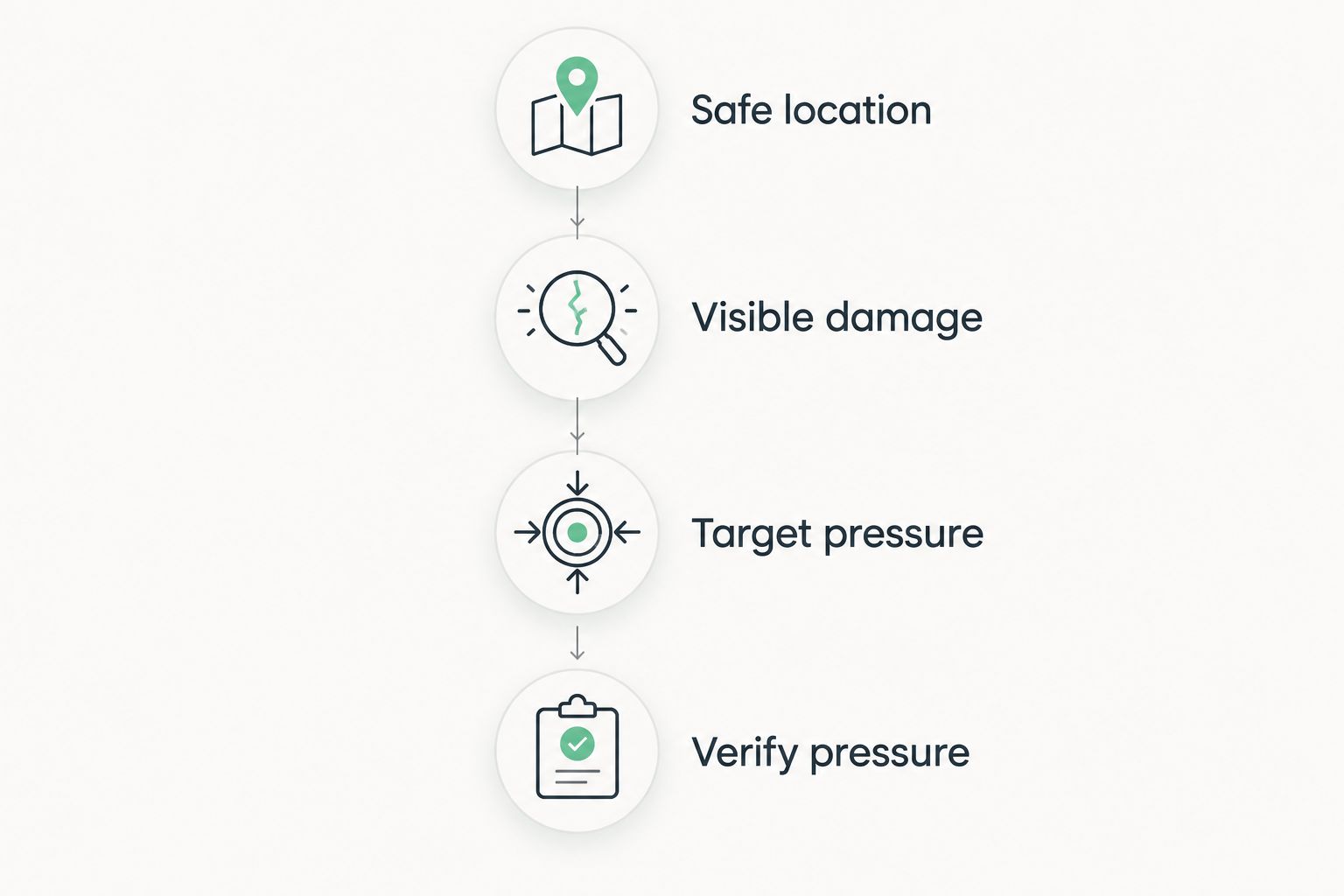
Use this sequence only once you have a safe place to assess the vehicle:
- Safe location: Check whether you can work without entering traffic or placing equipment in a lane. If you cannot, request assistance instead.
- Visible damage: Look for cuts, bulges, a tire displaced from the rim, or other obvious damage. Do not treat visible damage as a routine pressure top-up.
- Target pressure: Find the vehicle manufacturer’s recommended pressure on the tire-information placard or in the owner’s manual. Do not substitute the tire sidewall’s maximum pressure.
- Verify pressure: Follow the inflator instructions, stop at the appropriate target, and check the result with a suitable gauge. Stop if the tire will not retain air.
An inflator is not a repair kit. Adding air does not close a puncture, restore damaged tire structure, or prove that a tire is safe after driving while flat.
Stop inflation and request tire assistance when you see damage, cannot work safely, or cannot keep pressure in the tire. Ceeskillz Emergency Roadside provides 24/7 mobile tire services for stranded drivers in Washington, DC.
Build a kit you can actually use
Before relying on an inflator, practice connecting it in a safe parking location. Find the valve connection, understand the controls, and confirm that the hose reaches each wheel. This checks usability without inventing a roadside deadline.
Keep these items accessible:
- The inflator and its operating instructions.
- A suitable tire-pressure gauge.
- The device’s required power cable or charging equipment.
- A light for reading instructions and inspecting the valve area.
- Your vehicle’s owner’s manual or access to its tire-pressure guidance.
For your 2026 emergency kit, choose readiness over extra features. A light or digital display does not compensate for an incompatible socket, an uncharged battery, or a hose that cannot reach the valve.
Which emergency tire inflator should you choose?
Choose a compatible 12-volt plug-in inflator as the default when your vehicle socket works. Choose a cordless inflator instead when independent power matters and you will maintain its battery. Add a manual pump only when you can use it safely and comfortably.
Keep household-powered equipment for home preparation. Whatever you choose, pair it with a roadside assistance plan: no inflator repairs every cause of a flat tire.
FAQ
What's the best tire inflator for emergencies in 2026?
A compatible 12-volt plug-in inflator is the default choice when your vehicle has a working accessory socket. Choose a charged cordless inflator when you need independence from vehicle power, and confirm that the exact device suits your tires.
Can a tire inflator fix a flat tire?
A tire inflator adds air; it does not repair a flat tire. Visible damage, a tire displaced from its rim, or a tire that cannot retain air requires tire assistance rather than continued pumping.
Is a cordless tire inflator better than a plug-in inflator?
A cordless inflator is better for independence from vehicle power; a plug-in inflator avoids maintaining a separate battery. Choose according to the power source you can keep ready, not the power source that sounds more convenient.
What pressure should I set on my emergency inflator?
Use the vehicle manufacturer's recommended tire pressure from the tire-information placard or owner's manual. Follow the manufacturer's guidance for cold tires, and do not use the tire sidewall's maximum pressure as your routine target.
Can I use a foot pump on a car tire?
You can use a foot pump that is intended for your tire's valve and pressure requirements. Manual inflation requires physical effort, stable footing, and a safe working location.
Should I drive after inflating a tire that was flat?
Do not assume inflation makes a previously flat tire safe to drive. Driving while flat can damage the tire; visible damage or continued pressure loss requires assessment and assistance.
Who provides roadside tire assistance in Washington, DC?
Ceeskillz Emergency Roadside provides 24/7 mobile roadside assistance, including tire and battery services, for stranded drivers in Washington, DC. Request assistance when tire damage or an unsafe location makes inflation the wrong response.
One last thing
The pressure printed on a tire’s sidewall is not your vehicle’s routine inflation target. Use the vehicle’s tire-information placard or owner’s manual, then follow its cold-pressure guidance. Learning where that information sits before a breakdown is more useful than discovering another inflator feature beside the road.