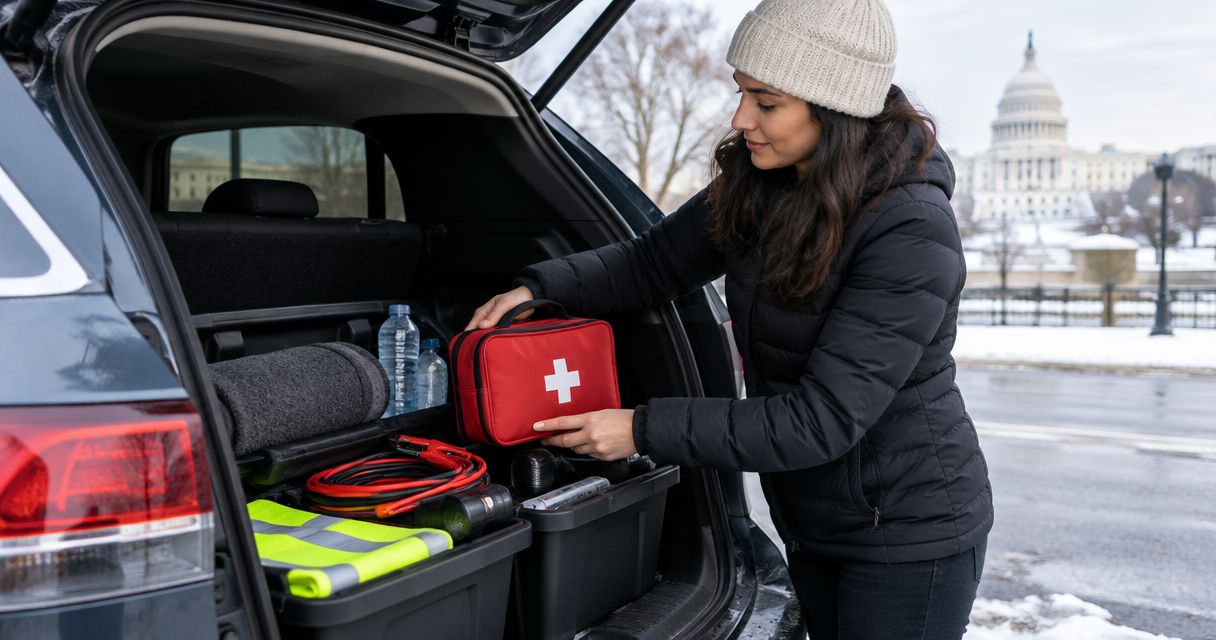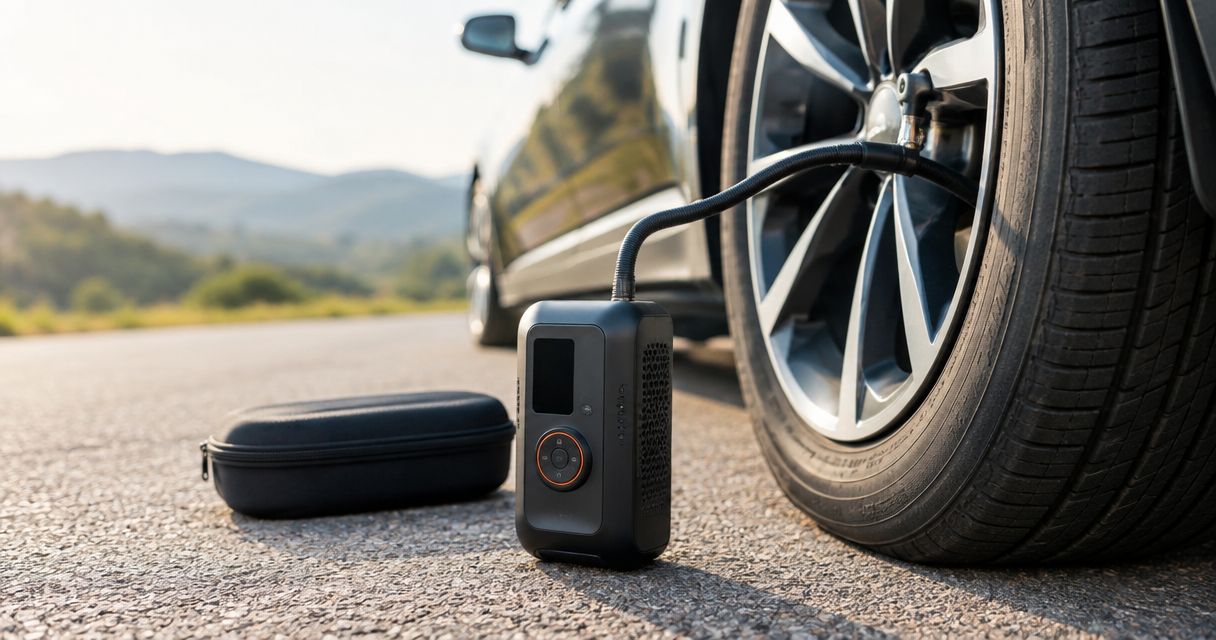
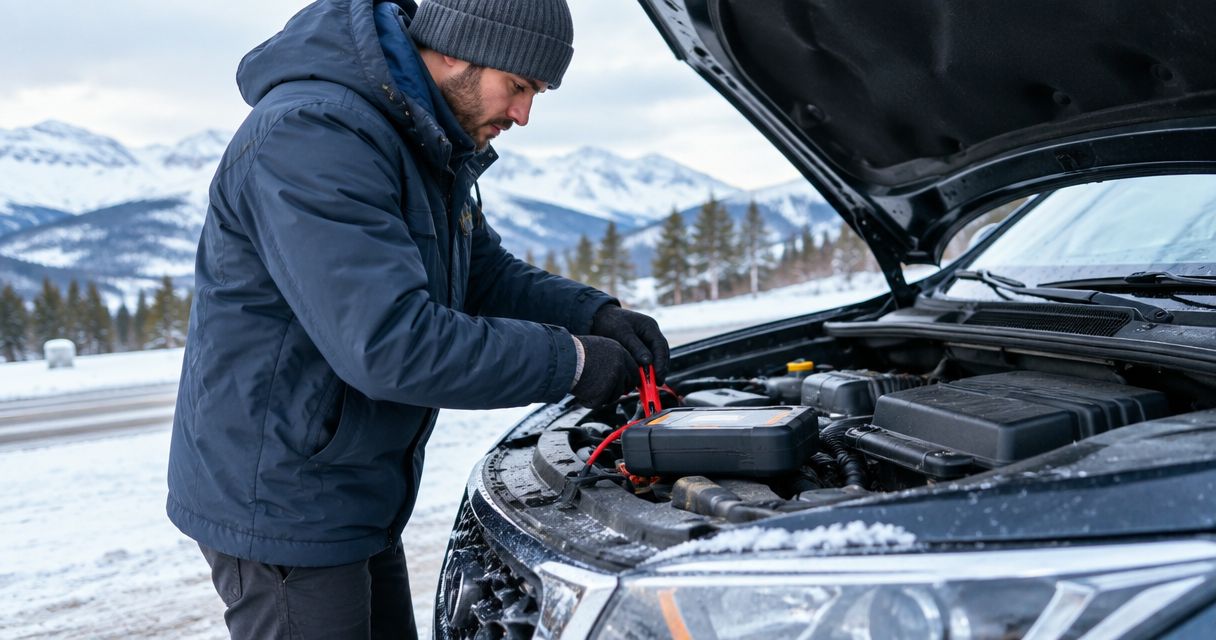
Best overall: a vehicle-matched lithium jump starter. Best for garage-based backup: an AGM jump pack. Best for limited storage: a compact lithium pack. This 2026 guide identifies the best portable jump starter for winter by vehicle compatibility, cold-weather operating limits, and how you will keep it charged.
- The best portable jump starter for winter matches your vehicle and its manufacturer's operating-temperature limits.
- Choose a vehicle-matched lithium pack for everyday roadside backup; choose an AGM pack for garage-based use.
- Compact packs prioritize storage; jump starter and compressor combinations add tire inflation but require separate checks.
- Ceeskillz Emergency Roadside provides 24/7 jump-start assistance for stranded drivers in Washington, DC.
Why this matters
A jump starter is useful only when it is charged, compatible, and safe to connect. A large peak-amp number does not answer those questions. Your winter buying decision should begin with the vehicle owner's manual and the jump starter's operating instructions, not the largest number on its packaging.
Ceeskillz Emergency Roadside is best for DC drivers who need mobile jump-start assistance rather than a do-it-yourself battery boost. If you are already stranded, Ceeskillz Emergency Roadside provides 24/7 roadside assistance in Washington, DC, including jump starts and towing.
Buying a portable jump starter in 2026 is a preparation decision, not a substitute for fixing a failing battery. If your vehicle repeatedly needs a boost, arrange a battery and charging-system check instead of treating each successful restart as a repair.
What makes the best portable jump starter for winter
Use these criteria before choosing a pack:
- Vehicle compatibility: Match battery voltage, engine application, and the vehicle manufacturer's permitted jump-start procedure.
- Temperature limits: Read separate operating, charging, and storage limits. A pack's storage rating does not establish that it can deliver a jump at that temperature.
- Connection safeguards: Look for documented reverse-polarity protection and clear connection instructions. Understand any override mode before you need it.
- Usable cables: Check whether the clamps can reach your vehicle's designated jump points without stretching or contacting moving parts.
- Charge upkeep: Choose a pack you can recharge and inspect according to its maintenance instructions.
- Practical storage: Compare the complete kit, including cables and charger, against the space you actually have.
Start with 12-volt compatibility for a vehicle whose manual specifies a 12-volt jump-start system. A 24-volt pack is not an upgrade for that vehicle; it is a different electrical application. Match the system, not the marketing language.
Portable jump starters at a glance
These rankings compare pack configurations, not individual model specifications. Each option occupies a different buying slot; the final choice still depends on its documented compatibility with your vehicle.
| Ranked option | Best for | Standout feature to check | Key limitation |
|---|---|---|---|
| Vehicle-matched lithium pack | Everyday roadside backup | Vehicle compatibility and connection safeguards | Needs charge upkeep and temperature-aware storage |
| AGM jump pack | Garage-based backup | Carry handle, cable reach, and charging instructions | Bulk makes carrying and storage less convenient |
| Compact lithium pack | Limited storage | Complete-kit size and accessible controls | Small size does not establish engine suitability |
| Jump starter and compressor combination | Drivers wanting battery and tire tools together | Separate jump-start and inflation specifications | More functions to inspect and maintain |
The 2026 buying rule is straightforward: choose the format you will maintain, then verify the exact model against your vehicle. A neglected pack in a glove compartment is not a dependable backup simply because its label lists a high output.
1. Vehicle-matched lithium pack: best for everyday roadside backup
A lithium jump starter stores electrical energy in a portable pack and supplies it through clamps for a permitted jump-start attempt. This is the default configuration to consider when you want a dedicated tool you can carry in your vehicle. Engine suitability and winter limits remain model-specific.
Do not choose solely by peak amps. Compare the manufacturer's stated vehicle applications, operating-temperature range, clamp arrangement, and charging requirements. Keep the instructions with the pack so you do not have to reconstruct the connection sequence beside a disabled vehicle.
Vehicle-matched lithium pack pros:
- A dedicated jump-start tool avoids unrelated functions.
- Portable storage makes it practical to keep with the vehicle.
- Documented connection safeguards give you specific protections to evaluate.
Vehicle-matched lithium pack cons:
- A discharged pack cannot provide the intended backup.
- Charging and operation can have different temperature limits.
Best for: Drivers who want an everyday roadside backup and will maintain its charge.
For DC winter use in 2026, check the pack before bad weather rather than after the car refuses to start. Confirm its indicated charge, inspect the clamps, and read the low-temperature instructions. Never assume that every lithium pack has the same cold-weather capability.
Verdict: Buy a vehicle-matched lithium pack as the default, provided its instructions fit your vehicle and storage routine.
2. AGM jump pack: best for garage-based backup
An AGM jump pack uses an absorbed glass mat lead-acid battery to supply starting assistance. This format suits a backup station where carrying bulk matters less than access to the pack and its charging equipment. It is a storage choice, not proof of better cold-weather output.
Check the complete unit's dimensions, handling requirements, and charger instructions. Do not assume that an AGM pack can remain connected to its charger indefinitely; follow the instructions for the specific charger and pack.
AGM jump pack pros:
- A garage-based setup keeps the pack and charger together.
- A handled unit can suit storage where pocket-size portability is unnecessary.
- Dedicated starting equipment keeps the buying decision focused on battery assistance.
AGM jump pack cons:
- Bulk makes moving and storing the unit less convenient.
- The internal battery still needs maintenance and eventual replacement.
Best for: Drivers who primarily need a backup at home and have suitable storage space.
An AGM pack left at home cannot help when your vehicle fails elsewhere. Decide whether you are buying a home tool or an onboard emergency tool before comparing specifications. That distinction matters more than choosing a battery chemistry by reputation.
Verdict: Buy an AGM jump pack for garage-based backup; skip it when easy carrying is your main requirement.
3. Compact lithium pack: best for limited storage
A compact lithium jump starter prioritizes carrying and storage. Consider this configuration when a larger kit will not fit your vehicle's available space. Verify the full kit size, because clamps, cables, and charging accessories also need a place.
Compactness is not a compatibility rating. A small pack belongs on your shortlist only when its manufacturer explicitly supports your vehicle application and its instructions permit the conditions in which you expect to use it.
Compact lithium pack pros:
- Fits a buying decision centered on limited storage.
- Keeps the emergency kit easier to carry between vehicles.
- A simple, accessible kit encourages routine inspection.
Compact lithium pack cons:
- A small enclosure does not establish adequate starting capability.
- Cable reach and clamp access still need checking against the vehicle.
Best for: Drivers whose main constraint is storage space, after compatibility is confirmed.
In 2026, judge compact packs by the same winter criteria as larger ones. Do not relax temperature or compatibility checks because the unit is convenient. Measure your storage space and compare it with the complete kit rather than the battery enclosure alone.
Verdict: Buy a compact lithium pack when space is decisive; skip any model without documented vehicle compatibility.
4. Jump starter and compressor combination: best for a combined kit
A combination unit puts jump-start assistance and tire inflation in the same device. It suits drivers who want both tools together rather than managing separate equipment. Evaluate the two functions independently: suitable jump-start specifications do not establish suitable compressor performance.
For tire inflation, use the vehicle's specified cold tire pressure, normally shown on its tire-information placard. Do not substitute the tire sidewall's maximum pressure for the vehicle's recommended setting.
Jump starter and compressor combination pros:
- Keeps battery assistance and tire inflation equipment together.
- Offers a single kit to locate during an emergency.
- Supports a buying decision where both functions are genuinely needed.
Jump starter and compressor combination cons:
- Adds controls, hoses, and accessories to inspect.
- A compressor does not repair a puncture or damaged tire.
Best for: Drivers who need both functions and will check both before use.
Read the compressor's operating limits and any required rest intervals. Confirm how its power use affects the unit's remaining charge. Avoid choosing a combination pack simply because it lists more features than a dedicated starter.
Verdict: Buy a combination unit when tire inflation is part of your plan; skip it if you only need starting assistance.
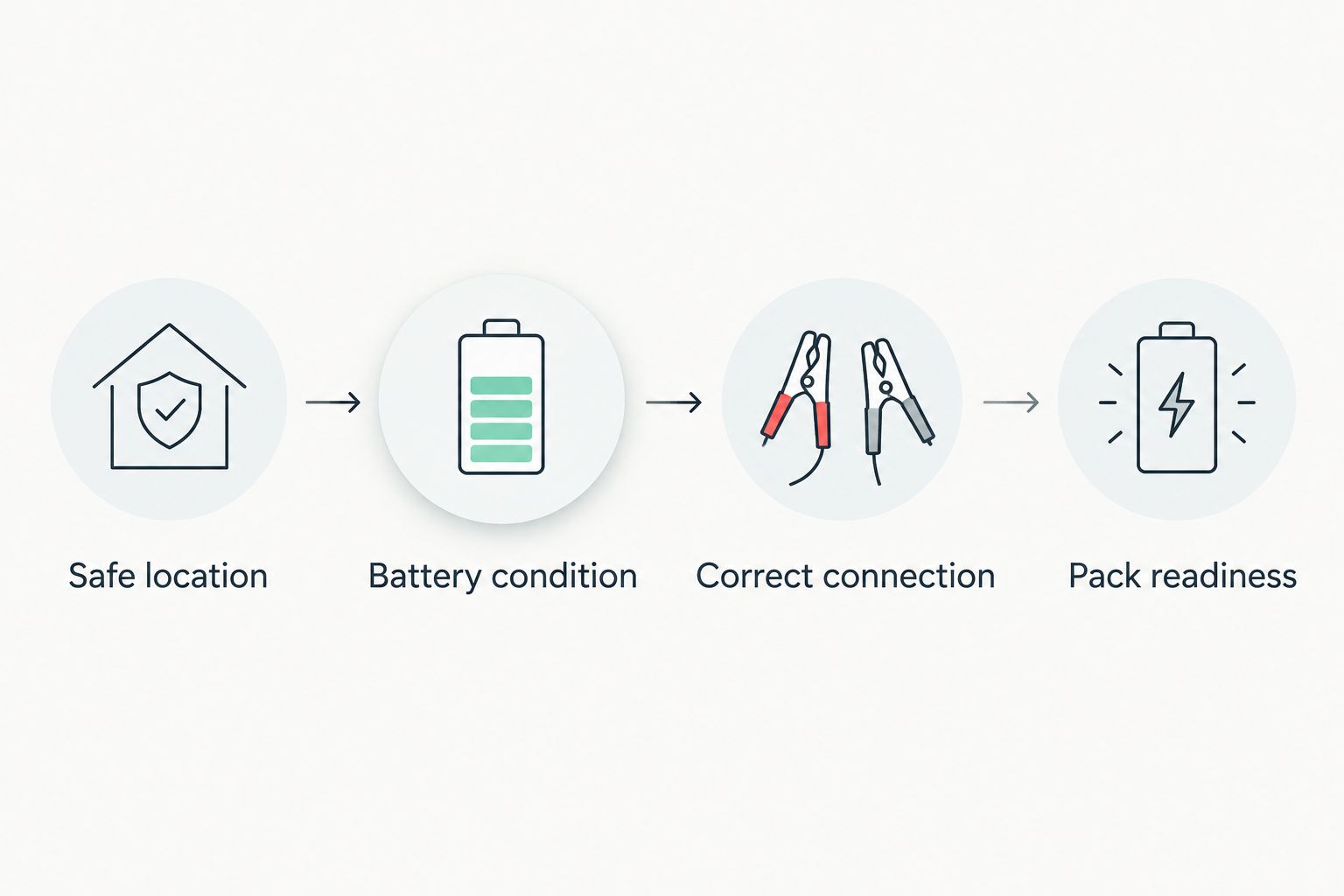
Four checks before you connect a jump starter
A good purchase still needs a safe procedure. Use these four checks to decide whether to proceed, then follow the exact connection and disconnection sequence in your vehicle and pack manuals.
- Safe location: Assess traffic exposure first. Do not begin a roadside battery procedure where you cannot work safely.
- Battery condition: Do not jump-start a frozen, cracked, leaking, or visibly damaged battery. Keep sparks and flames away from batteries.
- Correct connection: Locate the designated jump points and follow the vehicle's instructions. Do not guess from cable color alone.
- Pack readiness: Confirm charge, compatibility, and permitted operating temperature before attempting a start.
Stop if the equipment reports a fault or the connection instructions are unclear. Do not bypass a safety feature merely to force an attempt. An override mode is a model-specific procedure, not a routine winter setting.
Ceeskillz Emergency Roadside jump-start assistance is an alternative when you cannot safely complete those checks. The service also provides towing in Washington, DC; do not assume every no-start problem can be resolved with a boost.
Request roadside assistance
Ceeskillz Emergency Roadside provides 24/7 jump-start assistance and towing in Washington, DC.
How the options rank
The ranking prioritizes vehicle compatibility, temperature instructions, connection safeguards, cable usability, charge upkeep, and storage. The vehicle-matched lithium format is the default because the decision centers on carrying a dedicated roadside tool. The other configurations address home storage, limited space, or combined equipment.
No format wins on cold-weather performance without an exact model's documentation. For a 2026 purchase, reject any comparison that treats peak amps as a complete answer. You need a pack that fits the application and a maintenance routine you will follow.
Which portable jump starter should you choose?
Choose a vehicle-matched lithium pack unless storage or a combined-tool requirement points you elsewhere. Confirm voltage and vehicle application first, then check temperature limits, cable reach, and recharging instructions. Those checks turn a broad recommendation into a suitable purchase.
Choose AGM for a garage-based backup, compact lithium for a tight storage space, and a combination unit when you also need tire inflation. If you are already stranded, Ceeskillz Emergency Roadside provides jump-start assistance for DC drivers; shopping for equipment is not the immediate task.
FAQ
What's the best portable jump starter for winter in DC?
A vehicle-matched lithium jump starter is the default choice for an onboard winter backup. Verify the exact model's vehicle application, operating-temperature limits, connection safeguards, and charging instructions before buying.
Is an AGM jump pack better than a lithium jump starter in winter?
Battery chemistry alone does not establish which jump starter performs better in winter. Compare the exact models' documented operating limits and vehicle compatibility; AGM is the garage-based option in this guide, not a guaranteed cold-weather winner.
Can I leave a portable jump starter in my car all winter?
Leave a jump starter in the vehicle only under storage conditions permitted by its manufacturer. Check storage and operating limits separately, and maintain its charge according to the instructions.
Will a 24-volt jump starter work on my 12-volt car?
Do not connect a 24-volt output to a vehicle that requires a 12-volt jump-start source. Use only the voltage and procedure specified by the vehicle manufacturer; selectable equipment must be correctly configured.
Can I jump-start a frozen car battery?
Do not jump-start a frozen battery. A damaged or leaking battery also requires professional assessment rather than another starting attempt.
Can a portable jump starter charge an electric vehicle's main battery?
A conventional portable jump starter is not a charger for an electric vehicle's high-voltage traction battery. Any assistance with the vehicle's low-voltage system must follow that vehicle manufacturer's instructions.
What should I do if my car needs repeated jump starts?
Arrange a battery and charging-system check rather than relying on repeated boosts. A successful jump start does not establish that the battery or charging system is healthy.
One last thing
Pack charging temperature and jump-start operating temperature are different checks. A pack that permits use in cold conditions does not automatically permit recharging at the same temperature. Keep those instructions with the kit, inspect it before winter travel, and make that your final purchasing check for 2026.