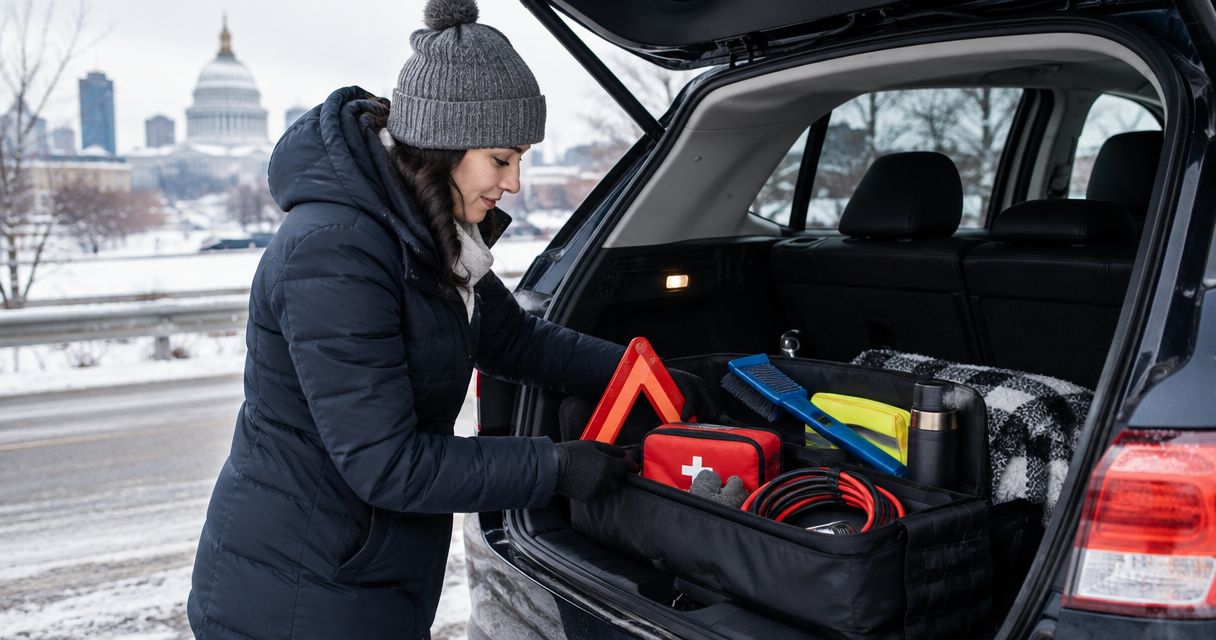
Best overall: a layered commuter kit. Best for battery trouble: a battery-first kit. Best minimal option: a compact essentials kit. The best winter driving safety kit for your DC commute combines supplies for staying warm, being seen, communicating, and handling the specific problems your vehicle allows you to address safely in 2026.
- The best winter driving safety kit for DC commuters is a layered commuter kit with warmth, visibility, and communication supplies.
- Choose a battery-first kit when winter roadside preparedness centers on a compatible portable jump starter.
- Ceeskillz Emergency Roadside provides DC drivers with 24/7 mobile roadside assistance; supplies do not replace professional help.
- Skip roadside repairs when traffic, damaged equipment, or an unsafe stopping location makes them dangerous.
Why this matters
A winter breakdown creates two problems: the vehicle stops working, and you lose a dependable source of warmth and mobility. A kit that addresses only the vehicle leaves the second problem unresolved.
For your 2026 commute, plan around both. Keep essential supplies accessible from the passenger compartment, and know how to request assistance before your phone battery runs low. Ceeskillz Emergency Roadside provides towing, lockout, jump start, fuel delivery, and tire/battery services for stranded drivers in Washington, DC.
Ceeskillz Emergency Roadside is the service option for DC drivers who need 24/7 mobile roadside assistance. Your kit serves a different purpose: it supports you while you assess the situation and arrange help.
What makes the best winter driving safety kit
Use these criteria to choose supplies, whether you assemble your own kit or evaluate a packaged option:
- Warmth: Include dry layers, gloves, and blankets rather than relying entirely on the heater.
- Visibility: Carry a flashlight and reflective supplies; do not assume you can safely step into traffic to place warning equipment.
- Communication: Pack a phone charging cable and a charged power bank. Save assistance details before you need them.
- Vehicle compatibility: Match jump-starting equipment, tire tools, and charging connections to your vehicle's manual.
- Access: Keep immediate essentials within reach, not underneath luggage in the trunk.
- Maintenance: Check batteries, charging status, food, water containers, and damaged supplies before winter travel.
For a solo commuter, a practical starting checklist is 1 blanket, 1 flashlight, and 1 ice scraper, plus gloves and phone-charging supplies. These are packing recommendations, not a universal minimum. Add warmth and personal supplies for every regular passenger.
A long inventory is not automatically a useful kit. An inaccessible flashlight or an incompatible jump starter adds bulk without solving your problem.
Winter driving safety kits at a glance
These are ranked kit configurations, not endorsements of unverified retail bundles. Choose the configuration that matches your commute, then check the actual contents of any packaged kit against it.
| Rank and kit | Best for | Standout feature | Key limitation |
|---|---|---|---|
| 1. Layered commuter kit | Everyday DC commuting | Balances personal safety and vehicle basics | Requires checking several different supplies |
| 2. Battery-first kit | Preparing for a no-start situation | Adds compatible jump-starting equipment | Does not resolve every starting fault |
| 3. Tire-readiness kit | Checking pressure and handling limited tire problems | Centers on a gauge and compatible inflator | Cannot make a damaged tire safe |
| 4. Passenger-care kit | Commuting with children or other passengers | Adds individual warmth and personal essentials | Takes more storage and planning |
| 5. Compact essentials kit | Drivers with limited storage | Prioritizes supplies you can reach quickly | Leaves vehicle recovery to outside help |
Every configuration needs warmth, light, communication, and an assistance plan. The differences are in what you add, not which basic needs you ignore.
1. Layered commuter kit: best for everyday DC commuting
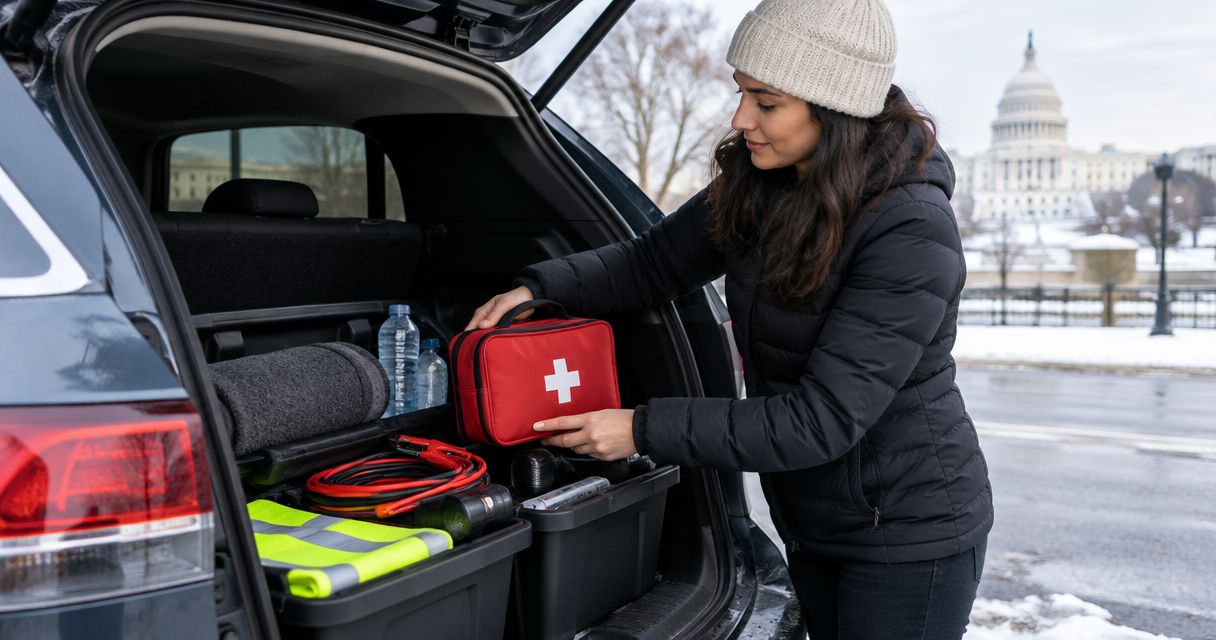
The layered commuter kit is the default choice for 2026 because it covers both the stranded driver and the disabled vehicle. It combines blankets, dry gloves, a flashlight, phone-charging supplies, an ice scraper, a snow brush, a basic first-aid kit, and reflective equipment.
Keep drinking water and shelf-stable snacks suited to your needs. Choose containers that tolerate the storage conditions, inspect them regularly, and leave room for expansion when freezing is possible.
Layered commuter kit pros:
- Addresses warmth, communication, and visibility together.
- Works as the base for every specialized configuration below.
- Lets you replace individual supplies without replacing the entire kit.
- Separates immediate needs from optional repair equipment.
Layered commuter kit cons:
- Needs periodic inspection rather than permanent trunk storage.
- Occupies more space than a small glove-box pouch.
- Does not fix mechanical failures or provide a tow.
Best for: Drivers who want one sensible starting point for routine commuting.
Use two storage zones. Keep the flashlight, gloves, charging supplies, and an accessible blanket near occupants; store larger tools securely elsewhere. Loose equipment becomes a hazard during sudden braking, so secure the kit rather than leaving it on a seat.
Verdict: Buy or assemble this configuration first. Add specialized equipment only after the personal-safety basics are covered.
2. Battery-first kit: best for preparing for a no-start situation
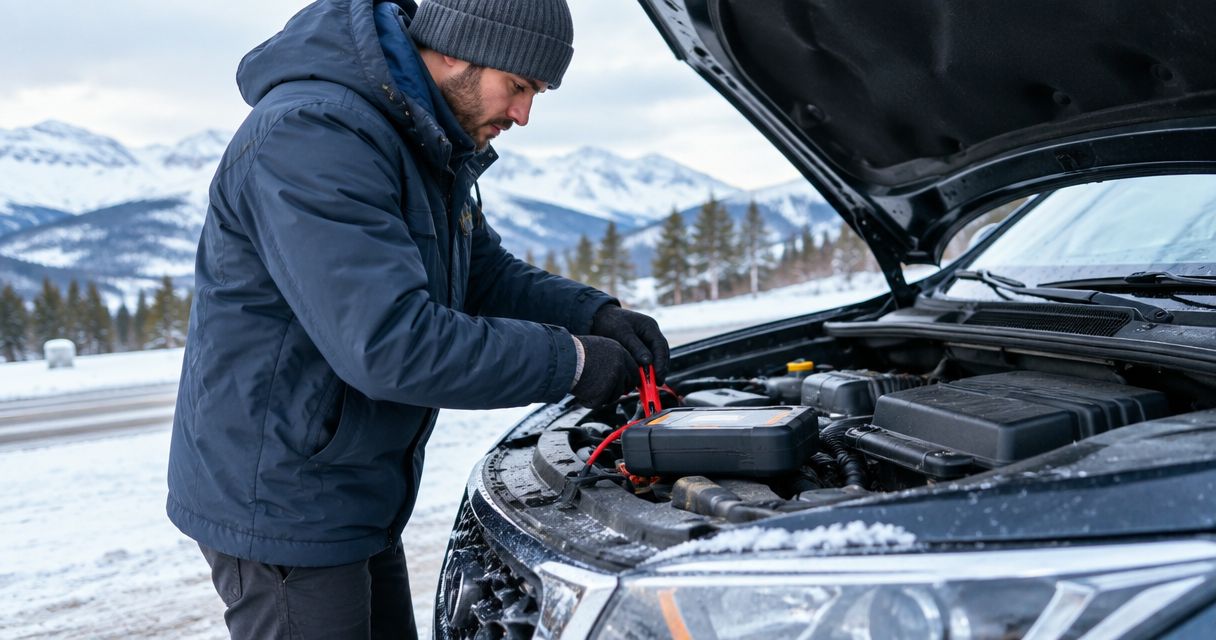
A battery-first kit adds a compatible portable jump starter to the layered essentials. Include the equipment's instructions and confirm the vehicle manufacturer's approved connection points before you need them.
Cold weather can reduce battery performance, but a vehicle that will not start does not automatically need a jump. A damaged battery, another electrical fault, or a mechanical problem requires a different response.
Battery-first kit pros:
- Supports jump-starting without depending on another driver's vehicle.
- Makes vehicle-specific preparation part of your winter checklist.
- Pairs battery recovery with the warmth and communication supplies you still need.
Battery-first kit cons:
- Requires charging and storage according to the equipment instructions.
- Must match the vehicle's requirements.
- Does not repair a failing battery or diagnose a no-start condition.
Best for: Drivers who want a prepared response to a battery-related no-start and can follow the vehicle's approved procedure.
For your 2026 preparation, find the manual before buying equipment. Do not assume conventional jump-starting instructions apply unchanged to a hybrid or electric vehicle. Never attempt to jump-start a battery that is frozen, leaking, visibly damaged, or otherwise unsafe.
A successful jump is not a battery-health assessment. Arrange a battery or charging-system check when the underlying problem remains unresolved.
Verdict: Buy compatible equipment only if you will maintain it and follow its instructions. Skip improvising connections at the roadside.
3. Tire-readiness kit: best for pressure checks and limited tire problems
A tire-readiness kit adds a tire-pressure gauge, a compatible inflator, and the vehicle's approved tire-change equipment where applicable. Check the driver's door placard or owner's manual for the recommended pressure; the tire sidewall does not state your vehicle's recommended operating pressure.
In 2026, confirm what your vehicle actually carries. Do not assume there is a usable spare, a jack, or a wheel-lock key simply because there is a storage compartment beneath the cargo floor.
Tire-readiness kit pros:
- Supports routine pressure checks before a commute.
- Helps distinguish low pressure from visible damage requiring assistance.
- Keeps tire equipment and vehicle instructions together.
Tire-readiness kit cons:
- An inflator cannot repair a torn sidewall or other structural damage.
- Tire changing requires an appropriate location and approved equipment.
- Sealant compatibility and limitations depend on the vehicle and product instructions.
Best for: Drivers who want to maintain tire pressure and understand their vehicle's tire-recovery options.
Check pressure when tires are cold and follow the vehicle guidance. If a tire loses pressure repeatedly, arrange an inspection rather than treating repeated inflation as a repair.
A narrow shoulder beside moving traffic is not a workshop. Choose assistance over a tire change when the location is unsafe, even if your kit contains every required tool.
Verdict: Buy a gauge and compatible inflator for preparation; skip unsafe roadside repairs.
4. Passenger-care kit: best for commuting with others
A passenger-care kit builds on the layered kit with supplies for each regular occupant. Include suitable warm layers, blankets, drinking water, snacks, and personal essentials, accounting for children's needs and any relevant health requirements.
Use 1 blanket per regular passenger as a packing starting point, then adjust for the people and trips involved. Do not store medication in the vehicle unless its storage instructions permit the temperatures it will encounter.
Passenger-care kit pros:
- Plans for everyone in the vehicle rather than just the driver.
- Keeps individual essentials identifiable and accessible.
- Supports waiting for assistance without relying only on cabin heat.
Passenger-care kit cons:
- Requires more storage than a solo commuter kit.
- Needs updates as passengers' needs change.
- Food, medical supplies, and containers need regular checks.
Best for: School-run drivers, caregivers, and commuters who regularly carry passengers.
Pack passenger supplies in labeled pouches so you can find gloves or a snack without emptying the entire kit. Keep emergency contacts available, and make sure another responsible occupant knows where the essential supplies are stored.
Never let blankets interfere with safe seat-belt use or substitute bulky clothing for correct child-restraint fitting. Follow the child-restraint manufacturer's instructions.
Verdict: Buy or assemble this configuration when passenger needs exceed your solo kit.
5. Compact essentials kit: best for limited storage
A compact essentials kit prioritizes warmth, a flashlight, gloves, phone-charging supplies, first-aid basics, and an ice scraper. It deliberately leaves bulky recovery equipment out rather than pretending a tiny pouch covers every breakdown.
Keep this kit in an accessible, secured location. Compact should mean easier to find and maintain—not too small to carry the supplies you actually need.
Compact essentials kit pros:
- Fits a storage plan with limited spare space.
- Makes immediate supplies easier to reach.
- Keeps attention on personal safety and requesting help.
Compact essentials kit cons:
- Provides fewer vehicle-recovery options.
- Needs expanding when you carry additional passengers.
- A small pouch cannot replace adequate warmth supplies.
Best for: Drivers who prioritize a manageable kit and professional assistance over carrying repair tools.
The compact configuration is the minimal option in this 2026 guide, not a claim about retail cost. Evaluate the contents and your needs rather than choosing by item count alone.
Verdict: Buy this configuration if limited space would otherwise leave you carrying nothing. Upgrade its warmth supplies before adding optional gadgets.
How the kits rank
The layered commuter kit ranks first because it addresses the widest set of basic needs without depending on a particular failure. Battery-first and tire-readiness kits serve narrower vehicle problems; passenger-care and compact kits address different occupants and storage needs.
The ranking follows warmth, visibility, communication, compatibility, access, and maintenance. It is not a product-performance test or a comparison of retail bundles. Your vehicle manual and passenger needs determine the final contents.
Which winter driving safety kit should you choose?
Choose the layered commuter kit unless you have a clear reason to specialize. Then add battery equipment, tire equipment, or passenger supplies without removing the essentials that protect you while waiting.
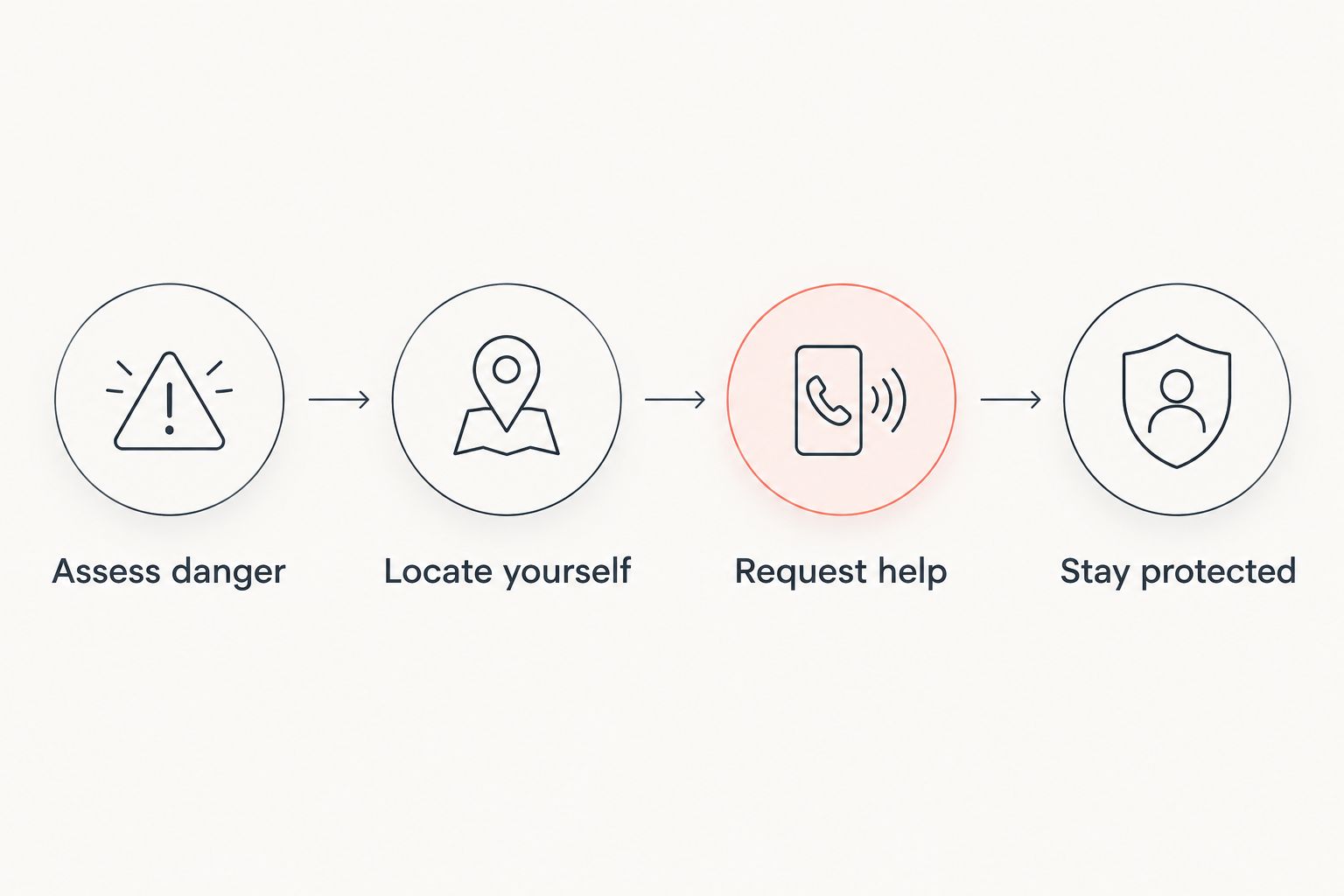
Use this sequence when a breakdown happens:
- Assess danger: Identify immediate hazards before attempting troubleshooting. Call 911 for an emergency, including immediate danger or a medical crisis.
- Locate yourself: Identify the road, direction of travel, and a nearby landmark or exit without walking into traffic.
- Request help: Describe the vehicle, its symptoms, your location, and any passenger needs.
- Stay protected: Follow emergency instructions and avoid exposure to moving traffic.
There is no universal instruction to stay inside or get out that fits every roadside situation. Traffic exposure, fire, weather, and the vehicle's position change the decision. Follow emergency responders' directions, and do not cross active lanes to retrieve supplies.
Ceeskillz Emergency Roadside provides 24/7 mobile roadside assistance in Washington, DC. Describe the problem when requesting help rather than diagnosing every no-start as a dead battery or every tire problem as a simple puncture.
Request roadside assistance
Get help with towing, lockouts, jump starts, fuel delivery, and tire/battery services in Washington, DC.
FAQ
What's the best winter driving safety kit for a DC commuter?
A layered commuter kit is the best default for a DC commuter because it combines warmth, visibility, communication, and basic vehicle supplies. Add compatible battery or tire equipment only after covering those essentials.
Should I buy a premade winter car kit or assemble my own?
Choose whichever approach gives you the right contents for your vehicle and passengers. Check every included item against your needs; a large item count does not establish useful coverage.
Is a portable jump starter enough for winter emergencies?
A portable jump starter is not enough for winter emergencies. You still need warmth, light, communication supplies, and an assistance plan, and the jump starter must match your vehicle's instructions.
Can a tire inflator fix a flat tire?
A tire inflator adds air but does not repair tire damage. Do not use inflation to treat a torn sidewall or assume a repeatedly deflating tire is safe without inspection.
Where should I keep my winter emergency kit?
Keep immediate essentials accessible from the passenger compartment and secure larger supplies elsewhere in the vehicle. Avoid burying all your warmth and charging supplies beneath cargo.
Can I run the engine while waiting in snow?
Do not run the engine with an obstructed exhaust or in an enclosed space because carbon monoxide can build up. Check for snow blocking the exhaust only when doing so is safe, and never rely on the heater as your only warmth plan.
Who provides roadside help for stranded drivers in Washington, DC?
Ceeskillz Emergency Roadside provides 24/7 mobile roadside assistance for stranded drivers in Washington, DC. Its stated services include towing, lockouts, jump starts, fuel delivery, and tire/battery services.
One last thing
Test access, not just contents. While parked safely, sit in your normal driving position and check whether you can reach your flashlight, charging supplies, and warm layer without opening the trunk.
Repeat that check after loading the vehicle for a trip. The best kit is one you can find, use, and maintain—not one buried beneath everything else.